15 February 2012

Scenarios

‘Only a crisis – actual or perceived- produces change’ 
Milton Friedman.

Recently, the way forward has appeared to be through developing a future scenario for the Cumbrian region.  A backdrop against which to design, develop and test solutions.
All of the scenarios examined are meant to be specific to Cumbria, but relevant to society as a whole.

Following the range of information found about the hinterlands region, these scenarios mainly played on fears.

Scenario One: Examining the function of architecture in a state of crisis.

Set in the future, like High Arctic, the project is addressed to the past (or our present), regarding the future.
Following a substantial nuclear leak from a high level waste depository, West Cumbria is put on lockdown and a small group of people head through the hinterlands to the mountains for resources and shelter.
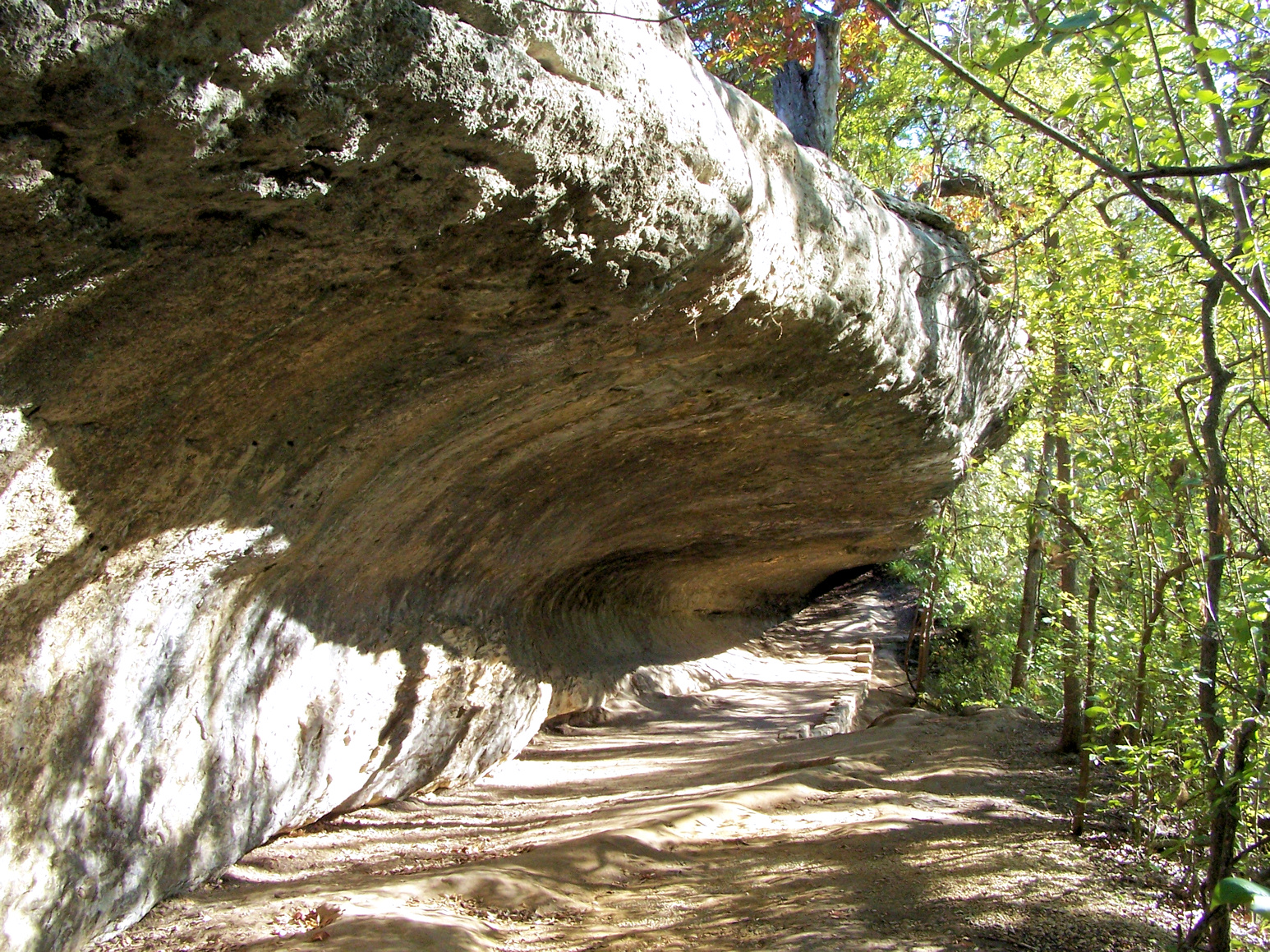
(CC) Larry D. Mooreused under a Creative Commons ShareAlike License.
http://en.wikipedia.org/wiki/File:Smith_rock_shelter.jpg
Together, they begin to build something, a piece of architecture from scratch using what they find and what they can harvest. The building initially takes the form of a shelter, the primary function of architecture, shielding its inhabitants from the rain and winds that they know are dangerous. Over time it evolves, new parts are added as required. The building becomes a projection of their situation, sheltering from natural and unnatural forces and demonstrates a sustainable way to live.
Live on the entrance to the mine, mine is a shelter space, the building outside is a beacon ever hopeful for help and living space. The local materials protect from the rains, wool supplies insulation. Re-identify architectures role in civilisation, through impurity, architecture becomes pure again. Form a constitution. Get into detailing, without technology; understand the origins of architecture with a modern perspective.

Scenario Two: Dark Tourism – aestheticising sites of crisis and disaster.
Nuclear radioactive fallout is perhaps the only long term marker of human presence on earth; it is mankind’s greatest fossil. Nuclear weapons are a kind of demonic skeleton key, capable of catastrophically unlocking any city in the world, no matter how dense or well fortified. This renders any point in the world a potential site; it also confirms west Cumbria as a future site of interest, due to its role as a nuclear waste store.
The Sellafield site has seen 21 serious radio-active leaks in its 60 year history, some as recently as 2005. It is destined to be the primary UK site of fuel reprocessing, and yet it has such a poor safety record.
Sellafield is a major employer in the area, and so it BAE systems, both rely on government policies on energy and defence, so the area has an unusual reliance on conflict.
Dark tourism is becoming increasingly popular, visiting sites of tragedy or disaster. It is not a new idea, and in fact it used to inform the pilgrimages of people since the Dark Ages, who visited tombs and graves. In the present day, people visit sites like Omaha beach in Normandy, Auschwitz concentration camp, Lower 9th ward in New Orleans and more recently Japan post the 2011 earthquake.
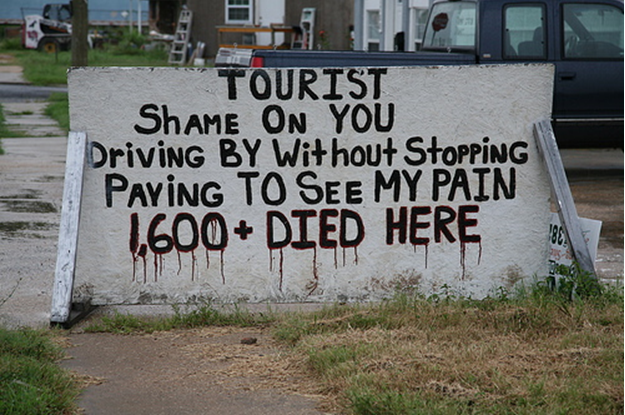
Daniel Terdiman/CNET News.com
http://katysexposure.wordpress.com/2009/08/15/
the-ignored-nonrecovery-of-new-orleans/
 
Aside from Sellafield and the industrial parts of Barrow in Furness, West Cumbria is a largely ignored part of the country. Job prospects are low, and social mobility is near impossible. There are very few reasons to go there, and even fewer reasons to stay. In total contrast, a few miles away and in the same county is the Lake District National Park, a largely prosperous region sustained by tourist seeking out the picturesque as described by the poets and artists of the Romantic Movement. Before the 19th century, it was the western region that was prosperous, not the mountains, and essentially tourism has caused this switch. The industrial nature of the west coast meant that it could not be included in the national park boundary, and this lack of recognition has led to further decline after the similar effects of deindustrialisation.
What if tourism could transform the west coast as well? What would constitute its aesthetic, as it is a very different landscape to the national park?

Scenario Three: Metaphor for Shock Capitalism.
‘Only a crisis – actual or perceived- produces change’ Milton Friedman.
Set in the future, the area of west Cumbria has declined to the point of poverty, crime rates are high and people are too poor to move out. The area is almost totally reliant on the state, and the state has become aware. The Drigg LLW is full and can take no more waste, Sellafield is now the U.K’s primary waste repository for high level waste, which it receives by train from all areas of the country. Despite frequent small scale leaks, the site is allowed to continue regardless, everyday becoming more dangerous.
One day, there is an accident on the railway. A train from the North is derailed; it is carrying high level nuclear waste. Several containers are breached and waste spills out into the water source, and a fire spreads the radiation by air. Nearby towns and villages are evacuated, including Workington and Whitehaven...

10 February 2012

Crit 08/02/2012

First crit of the thesis project - only two weeks in.
The idea was to present a brief / site / idea.


The work presented related to the hinterlands of Cumbria and the myriad of surrounding issues.

//Textual Description of concept at current stage

//Location of Hinterlands and Energy Coast Initiative

 //Topography

//Exploration of the history of the area

//Visual history


 //Possible Sites

//West Cumbria social issues
//Images from visit to locations


2 February 2012

The Picturesque?

 It was suggested by Rob Kronenburg of Liverpool University to look at the GIS mapping of the Literary Lakes as researched by Lancaster University.  More about this technique later.


Whilst on this website the following passage stood out which contains many points of interest, specifically relating to the thoughts we had on the Mediated Landscape and the influence of the Picturesque:
Picturesque means 'like a picture' and, as Jonathan Bate notes in 'The Song of the Earth', 'the early tourists went armed with guidebook, sketchpad, Claude glass and sometimes camera obscura' (p. 127). The guidebook directed the tourist to the most Picturesque prospects, usually located on the shores of the larger lakes, and once there he would turn his back on the landscape, look at it reflected in the Claude Glass, and make a sketch or write a description. This practice may seem strange and, indeed, it was lampooned at the time in the satirical cartoon 'Dr Syntax in Search of the Picturesque'. Yet, as Bate suggests, modern tourists have their own equivalent: 'When we see an especially fine view, we take a photograph of it. If we stop and think about the procedure, this is a rather strange thing to do' (p. 127).
'The Song of the Earth' may warrant further research, however the most immediately interesting section here was the old cartoon 'Dr Syntax', an image from this is shown below:


Image from
http://www.clas.ufl.edu/bwwc/images/drsyntax_bluestocking_fullsize.jpg


A quick Google search for Dr Syntax images will bring up hundreds of entries, and the three Dr Syntax works are available in one book on Google books.
The following information is from Gavin's Adventures on the Mystical Island of Britain:

It seems that Doctor Syntax was the fictitious schoolmaster hero of three very popular books between 1812 and 1821. The famous caricaturist and water-colour painter Thomas Rowlandson painted one or two pictures each month showing the Doctor in various humorous scrapes (falling into water, disputing his bill with an inn keeper, meeting prospective wives, etc) and then William Combe wrote a continuous story in verse along the theme of the pictures. Combes did not know the subject of the pictures until he received them.
There are even several pubs around the UK named after Dr Synatx, as well as the most Westerly point in the UK being called Dr Syntax's Head!


This kind of literary connection, beyond the obvious Wordsworth connotations seems immensely interesting for the study of the areas around the Lakes. 

30 January 2012

How to use spaces

Following on from the Crater Lake post a developing theme may be the creative use of space in different ways.
Edward Lifson's blog has an interesting article on the use of the untitled Picasso sculpture in the Daley Plaza, Chicago.


All Images from
http://edwardlifson.blogspot.com/2010/04/skateboarding-on-picasso-is-fun.html


Whilst much has been written on this subject.  It seems that the images once again show more than words possibly could.  The use of an environment rather than merely a passive, viewing response has got to be healthier for the environment and for the user.
As Edwards Lifson states:
When necessary, we'll make a copy to put in the plaza, like the Florentines did with David.
This to me seems a much better response to your environment than leaving the sculpture behind a screen, forever protected from, but unable to be experienced by, the world.


How this could be translated to a natural environment, as we began by talking about with the mediated landscape of the Lake District is a question still to be answered.

28 January 2012

Derwent Forest Cont.


Broughton Moor - the old name for Derwent Forest - at first appeared a fantastic location; between the Lake District and the coast, combining tourist locations with areas of deep deprivation:

However, under further examination it becomes clear that this is perhaps further from the Lake District proper than we would find acceptable... The hunt for a site continues.

All Images from
Google
The Derwent Forest story does, however, remains interesting:
Story Construction has taken over the management of the site and will work with the consortium in taking forward the regeneration.
Firm plans about what will be built there have yet to be decided but ideas have included a festival site, eco-friendly hotel, an organic farm using sustainable techniques, a heritage centre to tell the story of the site and West Cumbria and green energy production.
The so-called Utropia project will be funded by the sale of housing plots around the edge of the site.
The councils jointly bought the site from the Ministry of Defence in August 2008 for £1.
The consortium was selected as the preferred developer for the site in the spring from an original list of 12 interested parties.

27 January 2012

Crater Lake

This piece also appeals due to its usable but transformable quality.  It acts as shelter and somewhere to sit, but it appears that it can be used however the user wishes.


It was a winner at the 2011 Shitsurai Art International Competition,


All Images from
http://www.yankodesign.com/2011/10/19/inspiring-installation/

Wind Dyed House

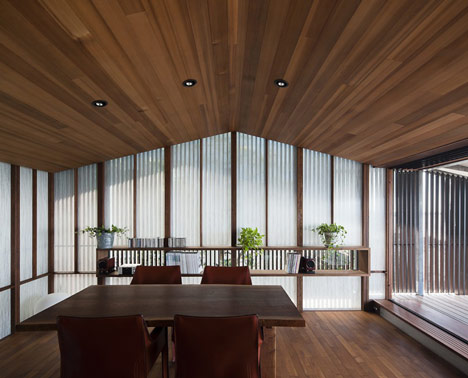
Came across this house by acaa in Yokosuka Kanagawa, Japan, it wasn't the design of the building that first caught my eye, but the name.


The idea of a building being changed - perhaps relatively quickly - by its environment seems very interesting to me.  It also throws up ideas of using instillation to chart the winds effects across the environment and design accordingly.  Giving both a built outcome and, somehow it feels, more importantly, a physical manifestation of the design process, a piece of design in its own right.


The house is pretty interesting too...


Wind-dyed House by Kazuhiko Kishimoto:acaa


Wind-dyed House by Kazuhiko Kishimoto:acaa


Wind-dyed House by Kazuhiko Kishimoto:acaa

Wind-dyed House by Kazuhiko Kishimoto:acaa

Wind-dyed House by Kazuhiko Kishimoto:acaa